


Gluten-Free Lagana (Traditional Greek Flatbread)
Updated: Feb 27
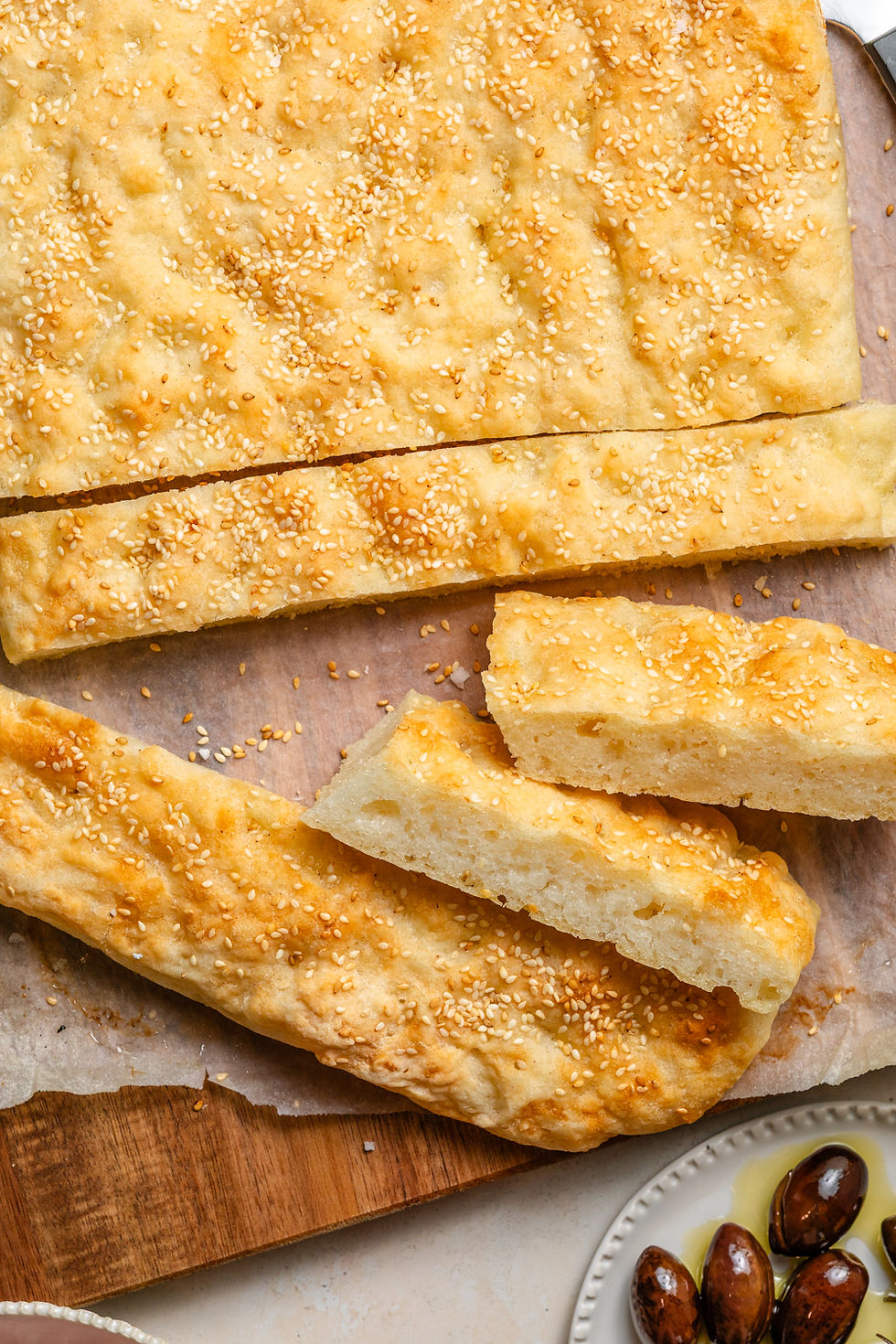
Gluten-free Lagana is a traditional Greek sesame flatbread made for Clean Monday and served at the beginning of Lent. Brushed with olive oil, dimpled by hand, and baked until golden, it’s a simple bread traditionally shared with taramasalata and olives at the Lenten table.

The History and Tradition of Lagana FlatBread (and why it matters)
Lagana holds a special place in Greek tradition and is one of the most symbolic breads in Greek cooking. It is traditionally baked and eaten on Clean Monday (Kathara Deftera), the day that marks the beginning of Lent in the Greek Orthodox calendar. For many Greek families, this isn’t simply a date, it’s a seasonal reset, a moment of simplicity, reflection, and gathering around food that feels intentional.
Clean Monday is celebrated with a table of Lenten dishes - humble, mostly plant-based foods meant to be shared. Lagana sits right at the centre of that table. Flat, dimpled, brushed with olive oil, and topped generously with sesame seeds, it’s made to be torn and eaten with taramasalata, olives, and other small plates. It’s not a bread designed to impress; it’s a bread designed to bring people together. Though simple in ingredients, it carries deep meaning, a reminder that tradition often lives in the most unassuming foods.
This is my mum’s lagana, adapted into a gluten-free version so my coeliac daughter can share the same tradition at the same table. Because traditions only stay alive when we choose them, when we make room for everyone and continue cooking the foods that hold meaning. I want her to feel what I felt growing up: that certain days have a rhythm, certain meals have a purpose, and that food can carry family history in the simplest, most beautiful way.
Watch How to Make It
Gluten Free Flour + Hydration Notes for Lagana
Gluten-free dough doesn’t behave like traditional bread dough, and that’s completely normal. Different gluten-free flour blends absorb water differently, which means the exact amount of water needed can vary from kitchen to kitchen. This recipe was tested using Caputo Fioreglut, and if you swap the flour blend, you may need to adjust the hydration to get the same result.
The most important thing is not the exact millilitres, it’s what the dough looks and feels like. Lagana dough should be thick, sticky, and spreadable, more like very thick hummus or soft mashed potato than a kneadable bread dough. It should hold its shape when pressed onto the tray, but still feel soft and hydrated.
If your dough feels stiff, dry, or tears as you try to spread it, it needs more water. Add extra warm water gradually, one tablespoon at a time, until the dough becomes smooth and easy to press out. A wetter dough will bake up lighter and softer, while a dry dough will bake dense and dry, especially with gluten-free flour.
Important FAQ
Can I use another brand of gluten-free flour?
If using a different gluten-free flour, the batter may look quite different from what is shown in the video. When testing this recipe with White Wings Gluten Free Self Raising Flour, the mixture was noticeably looser and more fluid. Avoid adding extra flour to match the appearance, as this can result in a dry bread. The final texture after baking is far more important than how the batter looks before it goes into the oven. If needed, you can adjust slightly next time by adding or reducing a couple of tablespoons of flour until you achieve a soft, spongy, homemade bread texture.
Why is my gluten-free lagana dough so sticky?
Gluten-free lagana dough is meant to be sticky and spreadable. It should feel more like a thick batter-dough than a kneadable bread dough. If you add too much flour to “fix” the stickiness, the bread will bake up dry and dense.
Why did my lagana turn out dry?
This almost always comes down to not enough water. Gluten-free flour needs higher hydration than wheat flour, and lagana should be a soft, well-hydrated dough before baking. Next time, add a little more warm water until the dough is thick, sticky, and easy to spread.
Why is my lagana gummy in the middle?
Gluten-free bread can seem gummy if it’s underbaked or sliced too early. Bake until deeply golden, then let the lagana cool for at least 10 minutes before cutting, the crumb continues to set as it cools.
Can I make lagana ahead of time?
Yes. Lagana is best eaten warm on the day, but it keeps well. Store in an airtight container and lightly toast to reheat and bring back the crust.
How should I serve lagana?
Traditionally, lagana is served simply. Eaten with taramasalata, olives, and other Lenten dishes. It’s not meant to be complicated.
Other Lenten Recipes
Spanakorizo (use dairy-free feta or leave out)

Gluten-Free Lagana (Traditional Greek Flatbread)
Resting for approx. 2 hours
Cooking 25 minutes
INGREDIENTS
500 g Caputo Fioreglut (gluten-free flour)
7 g dried yeast (1 sachet)
1 teaspoon sugar
1 ½ teaspoons sea salt
2 tablespoons olive oil
600ml warm water (150ml + 450ml)
For the top:
olive oil
1 tablespoon water
½ teaspoon sugar
Lots of sesame seeds
INSTRUCTIONS
Activate the yeast
In a small bowl, mix 150 ml of the warm water with the yeast and sugar. Rest for 8 minutes until foamy. Cover with cling wrap to keep warm.
Hydrate the flour
In a large bowl, combine the flour and salt. Add the olive oil and the remaining water (450ml). Mix until no dry flour remains.
Add yeast mixture
Add the activated yeast mixture. Mix until fully combined using oiled hands (or a food-grade glove) and squish and mix thoroughly until the dough is smooth and cohesive, this can take 3–4 minutes.
Adjust hydration
If the dough feels stiff, add a small amount of water gradually until it becomes thick, sticky, and spreadable.
First rise
Cover with cling wrap and a tea towel, and rest in a warm spot for 90 minutes until puffed and aerated.
Shape the lagana
Line a baking tray with baking paper and lightly oil it. Tip the dough onto the tray and press out with oiled hands into an oval or rectangle about 2 cm thick.
Second rise
Rest for 20 minutes.
Dimple + sesame
Lightly spray the lagana with olive oil. Mix the water and sugar for the topping, then either flick it over the surface with your fingers or brush it on. Dimple firmly with oiled fingertips, then cover generously with sesame seeds and press them in well.
Bake
Bake at 210°C (fan forced 200°C) for 25 minutes, or until deep golden.
Cool slightly
Rest for 15-20 minutes before slicing.(Gluten-free bread sets as it cools - cutting too early can make it seem gummy.) ENJOY!

Photography and Recipe by Margaret Pahos @CreateCookShare


Comments